A Designer's Look at the Blue Christmas Bow for Embroidery
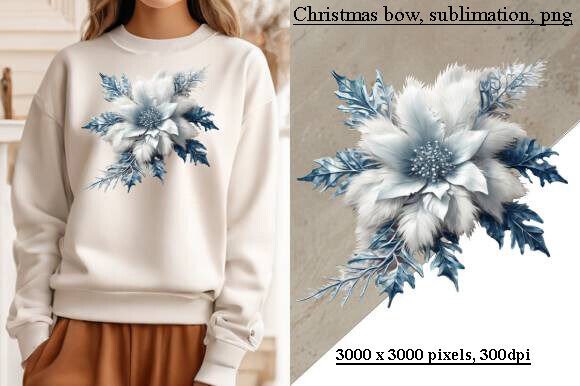
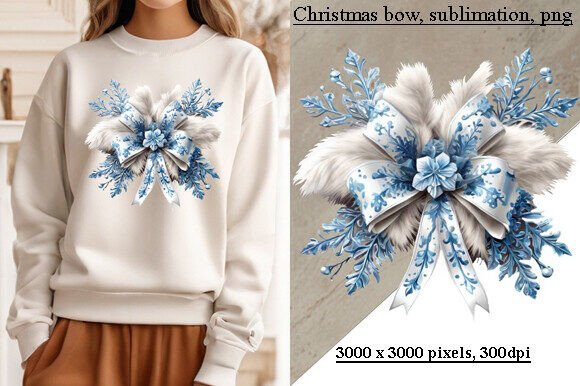
When I first saw this Christmas Bow, Decor, Ornament, Blue design, I paused. It’s not the typical red-and-green holiday motif, which immediately gives it a point of difference. The blue tone feels fresh, almost vintage chic, and the inclusion of the fur texture detail in the bow’s tails suggests a designer who was thinking about visual depth, not just a flat graphic. This isn’t a generic clip-art bow; it has personality.
First Impressions: Where This Bow Finds Its Home
The mood here is elegant and a touch whimsical. It creates a quieter, more sophisticated holiday vibe compared to the usual festive clamor. That blue color palette opens doors beyond traditional Christmas items. I immediately thought of it on a winter-themed baby item, like a cozy blanket or a knit hat, where red might feel too bold. For a boutique product, this could be the signature detail on a linen kitchen towel set or a custom apron—a holiday product that doesn’t scream "holiday" from across the room.
In terms of embroidery, the shape is excellent. The bow itself is a strong, central focal point with clean outlines, perfect for a clean satin stitch border or even an applique approach. The fur detailing, while a nice visual element in the graphic, will be the key consideration in stitch translation. Will it be rendered as a subtle fill stitch texture, or simplified into a few clever running stitch lines? That’s a decision you’ll need to make based on your machine embroidery file and the scale of your project.
The Practical Test: Imagining It Stitched
Let’s walk through a real scenario. Say I’m preparing a custom embroidered tote bag as a holiday gift for a client who prefers a more muted style. I’d load this design, thinking about size. The provided high-resolution PNG (3000 x 3000 pixels at 300 dpi) is a great starting point for creating a crisp embroidery file, but the final hoop size is critical. This design has some fine details in the fur and the bow’s folds. Stitching it too small on a cap or a baby sleeve might lose that texture, making it look like a simple blue blob. On a sweatshirt pocket or a pillow cover, where you can use a larger hoop, those details can sing.
For apparel decorators, fabric choice matters. On a textured fabric like a knit sweater, the fine fur details might blend away. On a smooth, tight-weave cotton of a tote bag or tea towel, they’ll stand out beautifully. Always test on scrap fabric first. This is a universal rule, but especially for designs with promising texture like this one.
Where This Design Elevates Your Product
Using a design with this kind of visual personality directly affects perceived value. On a handmade product, it signals thoughtfulness. A customer browsing Etsy listings sees a blue fur-trimmed bow on a linen pillow cover and thinks, "That’s unique," compared to the sea of standard red bows. It supports brand consistency for a small shop aiming for an elegant, modern craft aesthetic. As a personalized gift—perhaps embroidered onto a robe with a name underneath—it feels special and designed, not just slapped on.
For digital product sellers and creative entrepreneurs using this as a design asset in printable mockups, the transparent background and high resolution are, as described, perfect for that purpose. It can be seamlessly integrated into digital previews for your embroidery services or craft business marketing.
Caution Zones: Handling the Details with Care
While the design is strong, there are natural places to use it carefully. On dark fabric, that lovely blue will need very careful thread color selection to maintain its cool, icy hue—a bright royal blue thread might not capture the same feeling. The detailed corners of the bow and the fur elements mean that on stretchy fabric or items needing frequent washing, like baby clothes, you must use a proper stabilizer and consider a slightly reduced stitch density to maintain durability and clarity over time.
Also, if you plan to create an embroidered patch from this, the fur detailing could become very dense in a small area. Review the stitch density in your embroidery file conversion; a too-dense fill here might make the patch stiff. Sometimes, simplifying a graphic element for stitch purposes is the professional choice.
Final Designer Notes Before You Hoop It
My practical advice for any maker, from hobbyists to commercial embroidery businesses, is this: treat this Blue Christmas Bow as a promising design partner, not just a file. Test it in black and white mockups to see how the shapes hold up without color. Compare it on light and dark fabric backgrounds digitally before you commit thread. Check your thread color contrast against your actual project fabric—maybe that blue needs a silver or white highlight thread to pop on navy.
Most importantly, confirm the licensing. The product category is Illustrations and the type is Graphics. This information, coupled with the description, suggests it’s a digital asset for use. Before selling finished items like custom apparel or small shop merchandise, you must verify that your use falls within the license provided. Never assume.
In the end, Christmas Bow, Decor, Ornament, Blue is a design with character. It won’t work for every project, but for the right project—an elegant holiday gift, a boutique baby item, a sophisticated home decor piece—it can be the detail that turns a simple embroidered product into something memorable. Your job as the designer is to match its personality with the right fabric, scale, and stitching technique to let that personality shine through in every thread.